Choosing the right kids cap is more than just a fashion statement; it is a critical decision for parents focusing on health and comfort. In an era where outdoor activities are essential for childhood development, providing adequate sun protection and head warmth becomes a priority for caregivers worldwide.
The global demand for children's headwear has surged as awareness of UV radiation increases, prompting manufacturers to integrate advanced textile technologies into every kids cap. From breathable organic cottons to moisture-wicking synthetics, the evolution of these accessories reflects a deeper commitment to pediatric ergonomics and safety.
Understanding the nuances of fabric selection, sizing, and design ensures that a kids cap serves its primary purpose: protecting the most vulnerable part of a child's body while allowing them to explore their environment with confidence and style.
Global Market Context of Kids Cap
The global market for a kids cap has seen significant growth, driven by a rising global awareness of dermatological health. According to health guidelines similar to those issued by the WHO, reducing UV exposure in early childhood is paramount to preventing long-term skin damage, which has turned the humble cap into a medical necessity in sunny regions.
However, the industry faces a challenge: balancing rigorous safety standards with the fickle preferences of children. Many mass-produced options fail to provide sufficient breathability or secure fits, leading to discomfort and the eventual abandonment of the accessory by the child, thereby defeating the purpose of protection.
Defining the Modern Kids Cap
In simple terms, a kids cap is a specialized head covering designed to protect children from environmental elements while fitting the unique proportions of a growing head. Unlike adult headwear, which is often focused on aesthetics, children's versions must prioritize non-toxic materials and secure fastening systems.
From a manufacturing perspective, this product connects the textile industry with pediatric health. The modern kids cap is no longer just a piece of fabric; it is an engineered product that incorporates UPF (Ultraviolet Protection Factor) ratings and hypoallergenic dyes to ensure maximum safety for sensitive skin.
Whether it is a structured baseball style for sports or a soft bucket hat for the beach, the essence of the product lies in its ability to provide a protective barrier without restricting movement or causing thermal stress to the child's regulating system.
Core Components of Quality Headwear
Durability is the first pillar of a high-quality kids cap. Given that children are naturally active and prone to rough handling, the use of reinforced stitching and high-denier fabrics ensures that the cap can withstand countless wash cycles and playground adventures without losing its shape.
Material safety is where the kids cap truly differentiates itself. Using Oeko-Tex certified fabrics ensures that no harmful chemicals or allergens are present in the weave, which is critical because a child's scalp is significantly more absorbent than an adult's.
Scalability and fit adjustment are the final essential components. The integration of adjustable Velcro straps or elasticated bands allows a kids cap to grow with the child, providing a cost-effective solution for parents and reducing the amount of textile waste sent to landfills.
Performance Factors in Children's Caps
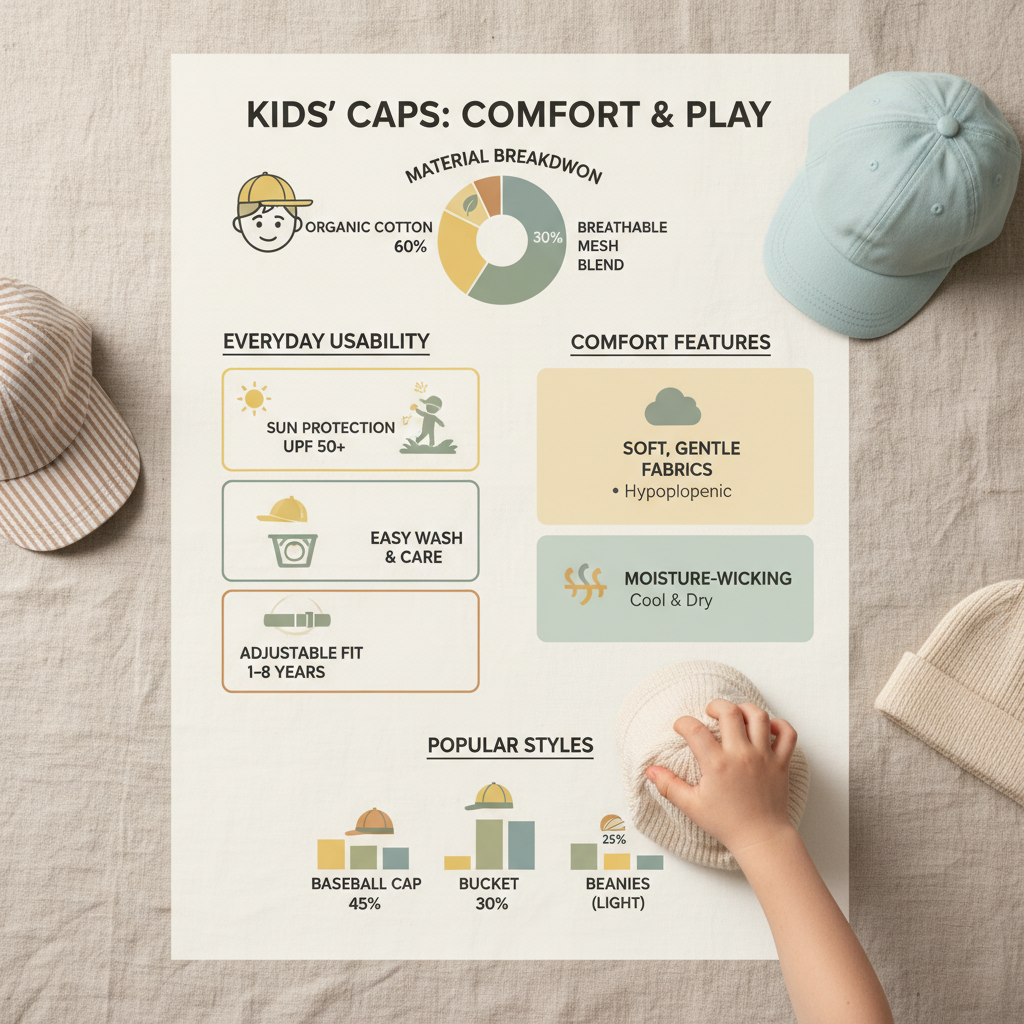
When evaluating the efficacy of a kids cap, manufacturers look at specific performance metrics such as breathability, UV blockage, and weight. A cap that is too heavy can cause overheating, while one that is too light may lack the structural integrity to shield the eyes from direct sunlight.
The balance between these factors determines the overall utility of the product. By analyzing different material blends, we can see which configurations offer the best protection-to-comfort ratio for active toddlers and school-aged children.
Kids Cap Performance Comparison by Material
Real-World Applications and Use Cases
The versatility of a kids cap extends across various environments. In educational settings, specifically during school field trips or outdoor sports days, standardized caps are often used for both safety (identification) and sun protection, ensuring that students remain hydrated and shielded from heatstroke.
Beyond the classroom, in remote industrial zones or agricultural regions where families work together, a rugged kids cap serves as a primary defense against dust and harsh glare. Similarly, in post-disaster relief operations, providing children with simple headwear is a key part of hygiene and protection kits provided by NGOs to prevent scalp infections and exposure.
Long-Term Value and Safety Benefits
Investing in a premium kids cap provides tangible long-term value by reducing the frequency of replacement. When a cap is designed with high-quality polymers and color-fast dyes, it remains functional for multiple seasons, offering a sustainable alternative to "fast fashion" accessories that end up in landfills after one summer.
From a psychological perspective, the right headwear fosters a sense of security and dignity for the child. When a child feels comfortable in their clothing, they are more likely to engage in physical activity and social interaction, which are critical for their cognitive and emotional growth.
Ultimately, the reliability of a well-made kids cap builds trust between the consumer and the brand. Parents prioritize safety over price, and a product that consistently protects their child's health creates a lasting emotional bond of trust and reliability.
Future Innovations in Kids Cap Design
The future of the kids cap is being shaped by the digital transformation of the textile industry. We are seeing the rise of "smart fabrics" that can change color when UV levels become dangerous, alerting parents to apply more sunscreen or move the child to a shaded area.
Sustainability is another driving force, with manufacturers pivoting toward biodegradable fibers and recycled ocean plastics. These eco-friendly kids cap options allow the industry to maintain high performance while significantly lowering its carbon footprint, aligning with global green energy goals.
Furthermore, automation in precision cutting is allowing for more ergonomic designs that cater to a wider variety of head shapes, ensuring a "perfect fit" for every child regardless of their growth stage.
Comparison of Innovative Materials for Future Kids Cap Production
| Material Type |
UV Protection Level |
Eco-Friendliness |
Cost Efficiency |
| Recycled Polyester |
High (UPF 50+) |
Very High |
Moderate |
| Organic Bamboo |
Medium |
Excellent |
Low |
| Smart UV-Reactive Fabric |
Extreme |
Moderate |
Very Low |
| Hemp Blend |
High |
Very High |
Moderate |
| Corn-based Polymer |
Medium |
High |
Moderate |
| Standard Cotton |
Low to Medium |
Low |
High |
FAQS
For summer, lightweight and breathable materials are best. Organic cotton or specialized moisture-wicking polyesters are recommended. Ideally, look for a kids cap with a UPF 50+ rating to ensure maximum sun protection while preventing the child's head from overheating during outdoor play.
Measure the circumference of the child's head just above the eyebrows. Choose a kids cap with an adjustable strap (like Velcro or a buckle) to allow for growth. A good fit should be snug enough to stay on during movement but not so tight that it leaves a mark on the forehead.
Not necessarily. Some cheap dyes and synthetic finishes can cause irritation. When selecting a kids cap, check for certifications like Oeko-Tex or GOTS, which guarantee that the materials are free from harmful chemicals and safe for pediatric use.
Replacement usually depends on growth and wear. On average, a child might outgrow a specific size of kids cap every 6-12 months. However, if the fabric begins to fray or the UV-protective coating wears off, it should be replaced to maintain safety.
It depends on the structure. Soft caps can usually be machine-washed on a gentle cycle. However, for structured caps with a reinforced brim, hand washing or spot cleaning is recommended to prevent the brim from warping and to extend the life of the product.
A baseball kids cap provides focused shade for the eyes and face, making it great for sports. A bucket hat provides 360-degree protection, covering the ears and the back of the neck, which is superior for long days at the beach or hiking.
Conclusion
The kids cap is far more than a simple accessory; it is an essential tool for health, safety, and comfort in a child's daily life. By focusing on the synergy between durable materials, pediatric-safe certifications, and ergonomic design, parents and manufacturers can ensure that children are protected from the elements without compromising their freedom of movement.
As we move toward a future of sustainable textiles and smart fabrics, the importance of quality headwear will only grow. We encourage parents and wholesalers to prioritize longevity and safety over low-cost alternatives to provide the best possible protection for the next generation. Visit our website for professional solutions: www.sjzrongdongcap.com