The global headwear market has seen a significant resurgence in retro-inspired designs, with 5 panel foam trucker hats emerging as a dominant trend in both streetwear and promotional apparel. These hats combine the nostalgic aesthetic of the 1970s with modern material science, offering a structured yet lightweight alternative to traditional baseball caps. By utilizing a specialized foam front and breathable mesh back, they provide a unique silhouette that appeals to a wide demographic, from outdoor enthusiasts to fashion-forward urbanites.
From a manufacturing perspective, the shift toward foam-based constructions addresses the need for versatility in branding and comfort in various climates. Unlike heavy canvas, the foam insert allows for high-profile shapes that remain consistent over time, providing a larger "canvas" for vivid sublimation printing and bold embroidery. This makes them an essential tool for brands looking to maximize visibility while ensuring the wearer remains cool and comfortable during high-intensity activities or hot summer months.
Understanding the nuances of these headwear pieces is crucial for wholesalers and retailers who aim to balance cost-efficiency with premium quality. As consumer preferences lean toward sustainable yet durable accessories, the evolution of 5 panel foam trucker hats reflects a broader industry move toward functional fashion. By analyzing the construction, material composition, and market application, businesses can better position these products to capture growing demand in the promotional and retail sectors.
The Anatomy and Engineering of 5 Panel Foam Trucker Hats
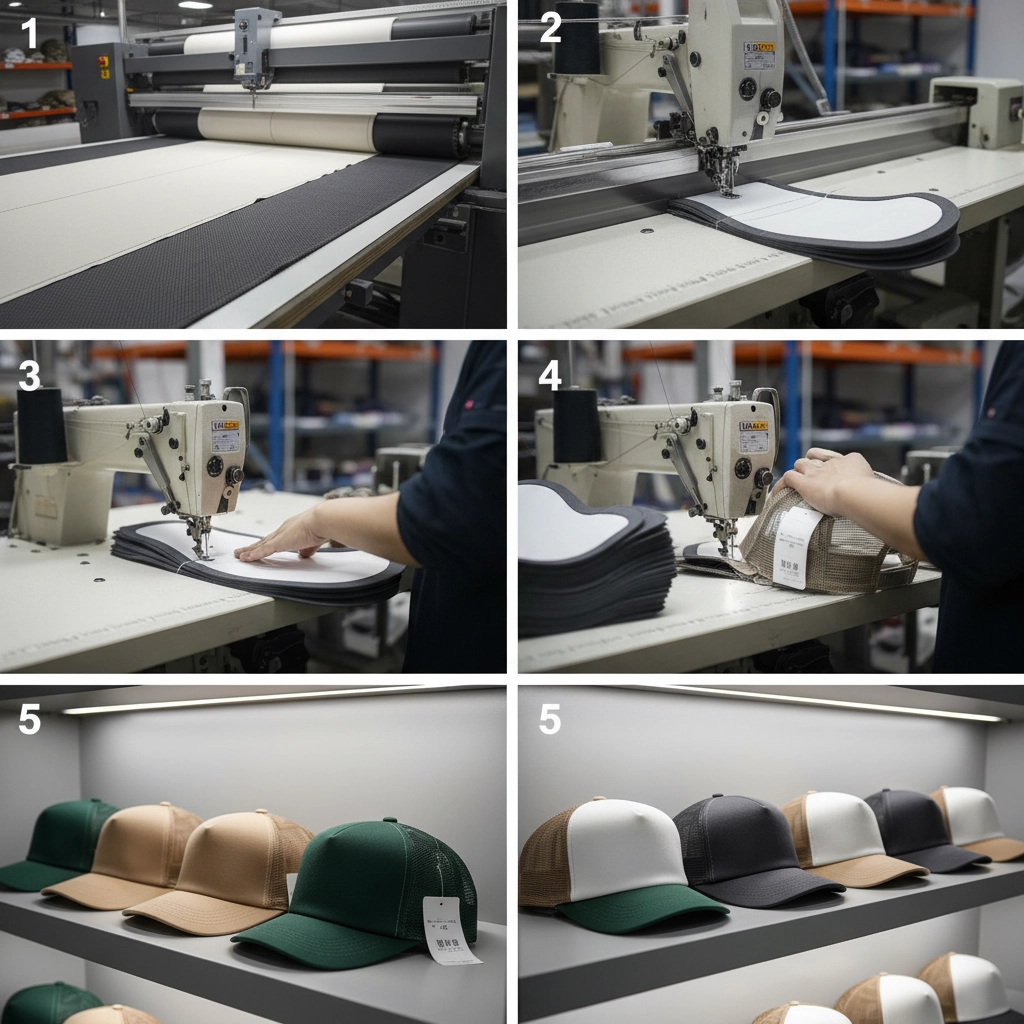
The structural integrity of 5 panel foam trucker hats relies on a precise configuration of fabrics. Unlike the standard six-panel cap, the five-panel design minimizes seams across the forehead, creating a smoother, more expansive front panel. This specific architecture is engineered to support the foam interlayer, which provides the "crown" its characteristic height and rigidity without adding significant weight, ensuring the hat doesn't collapse during wear.
Complementing the foam front is the high-density polyester mesh that forms the rear and side panels. This mesh is not merely for aesthetics; it is a critical functional component that facilitates maximum airflow, reducing heat buildup. The integration of a plastic snapback closure ensures a "one size fits most" versatility, making these hats an ideal choice for mass distribution and promotional campaigns where individual sizing is impractical.
Global Market Relevance and Demand Trends
In the contemporary fashion landscape, 5 panel foam trucker hats have transcended their origins as utilitarian gear for farmers and truck drivers. According to global apparel trade data, there is a marked increase in demand for "vintage-core" accessories across North America and Europe. This trend is driven by a cyclical return to 80s and 90s aesthetics, where the bold, high-profile look of foam caps serves as a statement piece in streetwear culture.
Furthermore, the rise of experiential marketing has pushed brands to seek accessories that offer high visibility for logos. The expansive front panel of the 5-panel foam construction is mathematically superior for branding compared to structured cotton twill, as it prevents the logo from distorting across multiple seams. This has led to an uptick in orders from the music, sports, and festival industries, where visual impact is paramount.
However, the challenge for manufacturers remains the balance between rapid production and quality control. As demand spikes, maintaining the consistency of the foam density and the tension of the mesh is critical. Industry leaders are now implementing stricter ISO-standard quality checks to ensure that these hats maintain their shape after repeated wear, addressing a common consumer pain point regarding the "sagging" of low-quality foam inserts.
Material Science: Foam vs. Traditional Fabrics
When analyzing the composition of 5 panel foam trucker hats, the primary differentiator is the polyurethane (PU) foam layer. Unlike traditional canvas or wool, which rely on internal buckram for structure, foam provides an inherent stiffness that is lightweight and water-resistant. This material science allows for a "floating" feel on the head while maintaining a sharp, professional silhouette.
The interaction between the outer polyester shell and the inner foam is where the magic happens. In high-end 5 panel foam trucker hats, the bond is achieved through advanced heat-pressing techniques, ensuring that the fabric does not bubble or peel over time. This synergy allows for vibrant dye-sublimation, where ink is embedded into the fibers rather than sitting on top, resulting in colors that do not fade under intense UV exposure.
In contrast, traditional fabric caps often absorb moisture, leading to increased weight and potential shrinkage. The foam and mesh combination is inherently hydrophobic, making it significantly more practical for outdoor activities, beachwear, and industrial work environments. This functional advantage, coupled with the stylistic appeal, ensures the long-term viability of the foam trucker design in the global headwear market.
Performance Metrics and Quality Standards
To evaluate the quality of 5 panel foam trucker hats, industry experts look at several key performance indicators (KPIs). The most critical is "shape retention," measured by the hat's ability to return to its original form after being compressed. Premium foam inserts are rated higher for their elasticity and density, preventing the "collapsed crown" effect often seen in budget-tier promotional items.
Another vital metric is the "breathability coefficient" of the mesh panels. High-quality polyester mesh must provide a balance between openness for airflow and tightness to maintain structural support. When these elements are optimized, the hat becomes a high-performance tool for thermoregulation, making it a preferred choice for workforce uniforms in tropical or arid regions.
Performance Comparison of 5 Panel Foam Trucker Hats
Diverse Applications Across Global Industries
The utility of 5 panel foam trucker hats extends far beyond the fashion runway. In the corporate promotional sector, they serve as "walking billboards." Because of their high profile, they are frequently used by event organizers at music festivals, sporting events, and trade shows to create a cohesive brand identity that is visible from a distance.
In industrial settings, particularly in logistics and construction, these hats are valued for their pragmatic design. The mesh allows for heat dissipation in non-climate-controlled environments, while the foam front provides a degree of protection against light sun exposure. From remote mining sites in Australia to delivery hubs in the US, the trucker cap remains a symbol of hard work and practical efficiency.
Sustainable Manufacturing and Eco-Friendly Innovations
As the garment industry faces pressure to reduce its environmental footprint, the production of 5 panel foam trucker hats is undergoing a green transformation. One of the most significant innovations is the introduction of rPET (recycled polyethylene terephthalate) for the mesh panels. By converting plastic bottles into high-performance yarn, manufacturers can significantly reduce virgin plastic consumption without compromising the hat's breathability.
Furthermore, there is a growing movement toward using biodegradable or water-based foams. Traditional PU foams often involve harsh chemicals; however, new "green foam" alternatives are being developed that maintain the same structural rigidity while being easier to recycle. This shift is particularly important for brands targeting Gen Z and Millennial consumers, who prioritize sustainability over fast-fashion convenience.
Digital printing technologies have also contributed to sustainability. By moving away from traditional screen printing, which requires large amounts of water and chemical solvents, manufacturers can now use waterless sublimation. This not only reduces waste but also allows for more complex, full-color designs on 5 panel foam trucker hats, combining ecological responsibility with creative freedom.
Strategic Sourcing and Customization Analysis
For businesses looking to integrate 5 panel foam trucker hats into their product line, strategic sourcing is key. The choice between "off-the-shelf" blanks and fully custom-engineered caps depends on the brand's positioning. Blanks offer speed and lower cost, while custom caps allow for adjustments in foam density, mesh aperture, and customized sweatband materials (such as moisture-wicking fabrics).
Customization goes beyond the logo. Modern trends include adding custom interior taping, personalized labels, and specialized closures. By optimizing the "touch-points" of the hat, a brand can transform a simple promotional item into a premium accessory. This value-add strategy allows companies to increase their retail margins and build stronger brand loyalty.
Ultimately, the success of a headwear line depends on the synergy between design and durability. A well-sourced 5 panel foam trucker hat should feel balanced—not too stiff, not too floppy—with stitching that can withstand daily wear and tear. Partnering with a manufacturer that understands both the technical constraints of foam and the aesthetic demands of the market is the most effective way to ensure long-term success.
Comparative Analysis of 5 Panel Foam Trucker Hat Customization Tiers
| Customization Level |
Material Spec |
Branding Method |
Market Positioning |
| Entry-Level Promo |
Standard PU Foam / Basic Mesh |
Screen Print |
Mass Giveaway |
| Mid-Tier Retail |
Medium-Density Foam / rPET Mesh |
3D Embroidery |
Boutique Merchandise |
| Premium Streetwear |
High-Density Foam / Custom Mesh |
Sublimation + Patch |
Limited Drop/High-End |
| Eco-Conscious Line |
Bio-Foam / 100% Recycled Mesh |
Water-based Ink |
Sustainable Branding |
| Industrial Grade |
Reinforced Foam / Heavy Duty Mesh |
Heat Transfer / Vinyl |
Workwear Uniforms |
| Luxury Hybrid |
Memory Foam / Premium Nylon Mesh |
Mixed Media / Metal Plate |
High-Fashion Accessory |
FAQS
The primary difference lies in the construction. 5 panel foam trucker hats feature a single, large front panel instead of two mirrored panels, which removes the center seam. This creates a smoother surface that is ideal for larger logos and prevents the "pinched" look. Additionally, the combination of a foam front and mesh back provides a higher profile and better ventilation than most 6-panel designs.
Yes, but they require specific care. To maintain the integrity of the foam, we recommend hand washing with mild soap and a soft brush. Avoid machine washing or tumble drying, as high heat and agitation can break down the PU foam cells, leading to permanent creases or "deflation" of the crown. Air drying in a shaded area is the best practice for long-term shape retention.
For 5 panel foam trucker hats, dye-sublimation is often superior to screen printing. Because the foam is typically covered in polyester, sublimation ink bonds chemically with the fibers, resulting in a breathable, fade-resistant finish that doesn't "crack" as the hat flexes. This is particularly useful for full-color graphics or photographic prints that cover the entire front panel.
Absolutely. Their design is specifically engineered for hot environments. The mesh back allows for maximum heat escape from the scalp, while the foam front provides a lightweight barrier against the sun. Compared to solid cotton caps, they significantly reduce the risk of overheating, making them a staple for outdoor laborers and athletes in sunny climates.
It depends on your target audience. High-density foam is best for premium streetwear brands that want a rigid, architectural look. Medium-density is a versatile choice for promotional merchandise, balancing cost and quality. Low-density or soft foam is better for casual, "worn-in" styles. We suggest requesting samples of each density to see how your logo interacts with the material's stiffness.
Yes, the industry is moving toward bio-based foams derived from renewable plant sources and recycled PU. These materials mimic the properties of traditional foam—providing structure and lightness—but have a lower carbon footprint and are more biodegradable. Pairing these with rPET mesh allows brands to market a fully "green" version of the classic trucker cap.
Conclusion
The 5 panel foam trucker hats represent a perfect intersection of nostalgic style and modern textile engineering. By combining the structural advantages of PU foam with the breathability of polyester mesh, these hats provide a high-value solution for brands seeking maximum visibility and consumer comfort. From the technical precision of the five-panel construction to the integration of sustainable rPET materials, the evolution of this headwear reflects a broader industry trend toward functional, durable, and environmentally conscious fashion.
As the market continues to evolve, the key to success for wholesalers and designers lies in prioritizing material quality and strategic customization. Whether used as a high-end streetwear accessory or a practical industrial uniform, the foam trucker hat remains an indispensable tool for brand expression. We encourage businesses to explore advanced sublimation and eco-friendly foam options to stay ahead of the curve in the competitive global apparel market. Visit our website for premium manufacturing solutions: www.sjzrongdongcap.com