Call on order
Email


When sourcing promotional headwear, buyers often struggle to balance breathable functionality with structural durability. For those seeking mesh hats wholesale, the primary challenge lies in identifying a manufacturing partner that can maintain consistent mesh tension and fabric quality across large-volume orders without compromising the cap's overall shape.
The demand for these specific caps extends beyond simple fashion; they are critical for outdoor activities, corporate branding, and athletic events where heat dissipation is paramount. Integrating a high-quality mesh back with a robust front panel—such as super heavy brushed cotton—creates a product that serves both as a functional sunshade and a professional marketing tool for global brands.
Understanding the technical specifications of headwear production is essential for optimizing procurement costs and ensuring product longevity. In this guide, we analyze the critical factors of mesh hats wholesale, from material selection to the logistics of large-scale manufacturing, providing a professional framework for informed purchasing decisions.


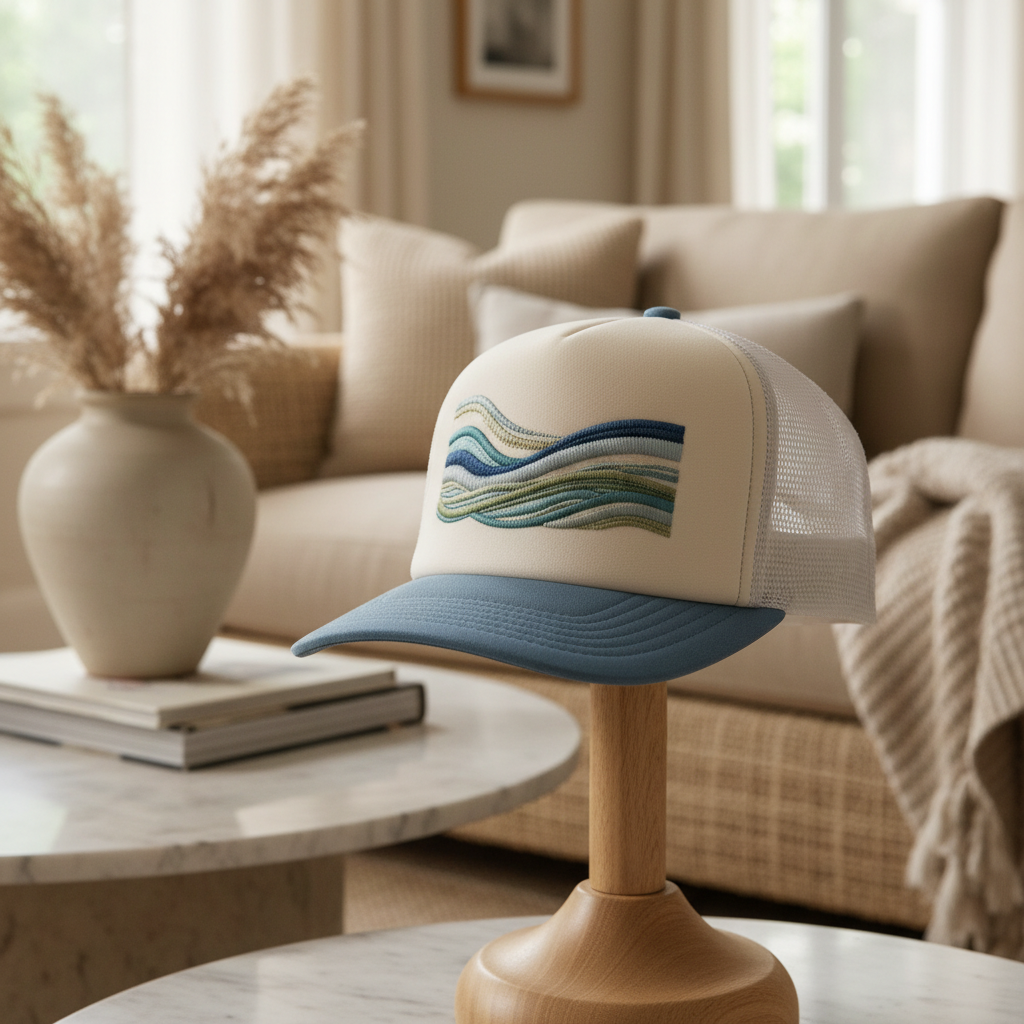
A professional trucker or mesh cap is not a monolithic piece of fabric but a strategic assembly of different textiles. The front panels typically utilize heavy-duty materials—such as 100% super heavy brushed cotton—to provide a stable surface for customized logos and structural integrity. This contrast between the rigid front and the breathable polyester mesh back is what defines the utility of the product in high-temperature environments.
Beyond the primary fabrics, the construction details like curved visors with sandwich styling and embroidered eyelets play a vital role in both aesthetics and durability. The use of silver metal buckles for back closures ensures a secure, adjustable fit for a wide range of head sizes, typically centered around a standard 58cm circumference, ensuring the product meets international sizing norms.
When evaluating suppliers for mesh hats wholesale, the material specification is the first point of failure or success. The quality of the brushed cotton determines the cap's resistance to deformation over time, while the mesh density affects the balance between airflow and structural support. A low-density mesh may lead to "sagging," which diminishes the professional appearance of the promotional gear.
Another critical factor is the precision of the customization process. Whether employing embroidery or screen printing, the alignment on the front panel must be exact. High-capacity manufacturers utilize professional plate-making and cutting divisions to ensure that every single piece in a 1,000-piece MOQ order remains identical, eliminating the variance often found in smaller, less experienced workshops.
Finally, the sweatband material significantly impacts wearer comfort. Utilizing polyester sweatbands helps in moisture wicking, which, combined with the mesh back, maximizes the cooling effect. This technical synergy is essential for products destined for the sports, military, or industrial sectors where prolonged outdoor exposure is a requirement.
The integration of high-density fabrics in headwear production provides more than just a premium feel; it extends the operational lifecycle of the garment. By using super heavy brushed cotton, manufacturers can ensure that the cap maintains its shape even after repeated use and cleaning, which is a key requirement for corporate clients who view their promotional headwear as a long-term brand representation.
The primary value of combining heavy cotton with polyester mesh is the creation of a "climatic barrier" that protects the scalp from direct UV radiation while allowing internal heat to escape efficiently, making it an ideal solution for high-exposure environments.
From a procurement perspective, this material combination reduces the total cost of ownership by decreasing the replacement frequency. When a brand distributes a high-quality cap that lasts for years, the associated marketing value persists far longer than it would with a lightweight, low-cost alternative that wears out in a single season.
Efficiency in the supply chain is measured by the ability to scale production without extending lead times exponentially. For standardized headwear, the transition from a sample phase to full-scale production is the most critical window. Samples typically take 2-7 working days, providing a blueprint for the final mass production run.
Lead times fluctuate based on order volume and customization complexity. For orders ranging from 5 to 10,000 pieces, the logistical coordination between raw material suppliers and the factory's cutting and sewing divisions must be seamless to ensure delivery via ports like Tianjin remains on schedule.
The versatility of the mesh cap allows it to serve multiple high-demand sectors. In the commercial promotional sector, these caps are used as high-visibility branding tools for events and trade shows. Their ability to be customized with specific logos makes them an effective medium for increasing brand recall in crowded public spaces.
In industrial and outdoor settings, the application shifts toward functional protection. From agricultural work to logistics and construction, the mesh cap's windproof and sunshade capabilities provide essential protection for workers. This dual-purpose nature—being both a fashion accessory and a protective tool—drives the consistent wholesale demand across North American and European markets.
The headwear industry is currently undergoing a significant shift toward eco-friendly textile production. The introduction of RPET (Recycled Polyethylene Terephthalate) and Organic Cotton is no longer an optional luxury but a market requirement for brands operating in the EU and North America. Organic cotton certifications allow manufacturers to prove their commitment to reducing chemical runoff during the farming process.
Transitioning to sustainable materials requires a specialized supply chain. Only a few factories in China possess the necessary certifications to guarantee the organic origin of the cotton. This creates a competitive advantage for manufacturers who can provide verifiable documentation, such as BSCI or OEKO-TEX, alongside the finished product.
For the end buyer, sustainable mesh hats offer a way to align their corporate social responsibility (CSR) goals with their marketing efforts. By selecting RPET mesh, companies can reduce their carbon footprint while maintaining the same performance metrics as traditional polyester, ensuring that sustainability does not come at the cost of durability.
One of the most frequent challenges in bulk headwear procurement is the "quality gap" between the initial sample and the mass-produced shipment. This is often caused by a lack of strict quality control during the cutting and sewing phases. Establishing a clear specification sheet that defines the exact GSM of the cotton and the mesh aperture size is the only way to mitigate this risk.
Logistical delays at the port of exit can also jeopardize project timelines. Partnering with a manufacturer that possesses its own logistics team or is located near major transport hubs, such as the proximity to Beijing and Tianjin, ensures that the transit time from factory to ship is minimized.
Finally, payment and delivery terms must be transparent. A standard 30% deposit with the balance paid before shipping via T/T or L/C provides a balanced risk profile for both the manufacturer and the buyer, ensuring that production starts promptly while securing the final transaction.
| Evaluation Metric | Standard Mesh Cap | Premium Brushed Cotton | Organic/RPET Line |
|---|---|---|---|
| Durability | Moderate | High | High |
| Breathability | Excellent | Good | Excellent |
| Brand Value | Basic | Professional | Eco-Conscious |
| Lead Time | Fast | Standard | Extended |
| Certification | Basic | BSCI/Form A | Organic/OEKO |
| Typical MOQ | 1000 pcs | 1000 pcs | Negotiable |
The standard minimum order quantity (MOQ) is typically 1,000 pieces per color for common styles. This volume allows the manufacturer to optimize the fabric cutting process and ensure consistent dyeing across the entire batch. For specialized sustainable materials or custom ODM designs, MOQs may vary and are usually subject to negotiation based on the complexity of the project.
The most effective method is to request blank samples for free before proceeding with the full order. Once the sample is approved, the manufacturer uses it as the gold standard for the mass production run. Additionally, requesting a pre-shipment sample of the customized product ensures that the embroidery, logo placement, and material quality meet your exact specifications.
For maximum durability, 100% super heavy brushed cotton is recommended for the front panels. This material resists wear and maintains the cap's structure better than lighter cotton blends. Combining this with a high-density polyester mesh back and a silver metal buckle closure creates a professional-grade cap suitable for long-term use in diverse environments.
Yes, modern manufacturing now includes RPET (recycled polyester) and Organic Cotton options. These materials are ideal for brands targeting environmentally conscious consumers. It is important to verify that the supplier can provide official Organic Cotton certifications, as only a limited number of factories in China are certified to produce and document these textiles.
The primary delivery port is typically Tianjin (FOB). Lead times generally range from 20 to 60 days depending on the order volume, with smaller orders (up to 5,000 pieces) usually taking 20-30 days and very large orders exceeding 10,000 pieces being negotiable. Shipping is primarily handled via sea freight for cost-efficiency in large-volume wholesale.
While the standard size is 58cm, most wholesale manufacturers accept OEM and ODM requests for size adjustments. Customizations can include the visor style (curved vs. flat), the type of back closure, and the specific dimensions of the panels. Providing a detailed technical drawing during the sampling phase is the best way to ensure a custom fit.
Successful procurement of mesh hats wholesale depends on a technical understanding of material synergy and supply chain reliability. By prioritizing high-density brushed cotton and verifiable certifications, buyers can secure products that offer both immediate promotional impact and long-term functional value. The balance between breathability, durability, and ethical sourcing remains the primary driver of quality in the global headwear market.
For businesses seeking a reliable manufacturing partner with over 15 years of experience in professional hat making, Shijiazhuang Rongdong Imp&Exp Trading Co., Ltd. provides the necessary infrastructure, from professional design and plate-making to certified sustainable fabric options. To explore customized headwear solutions that meet international quality standards, visit www.sjzrongdongcap.com for professional consultation.